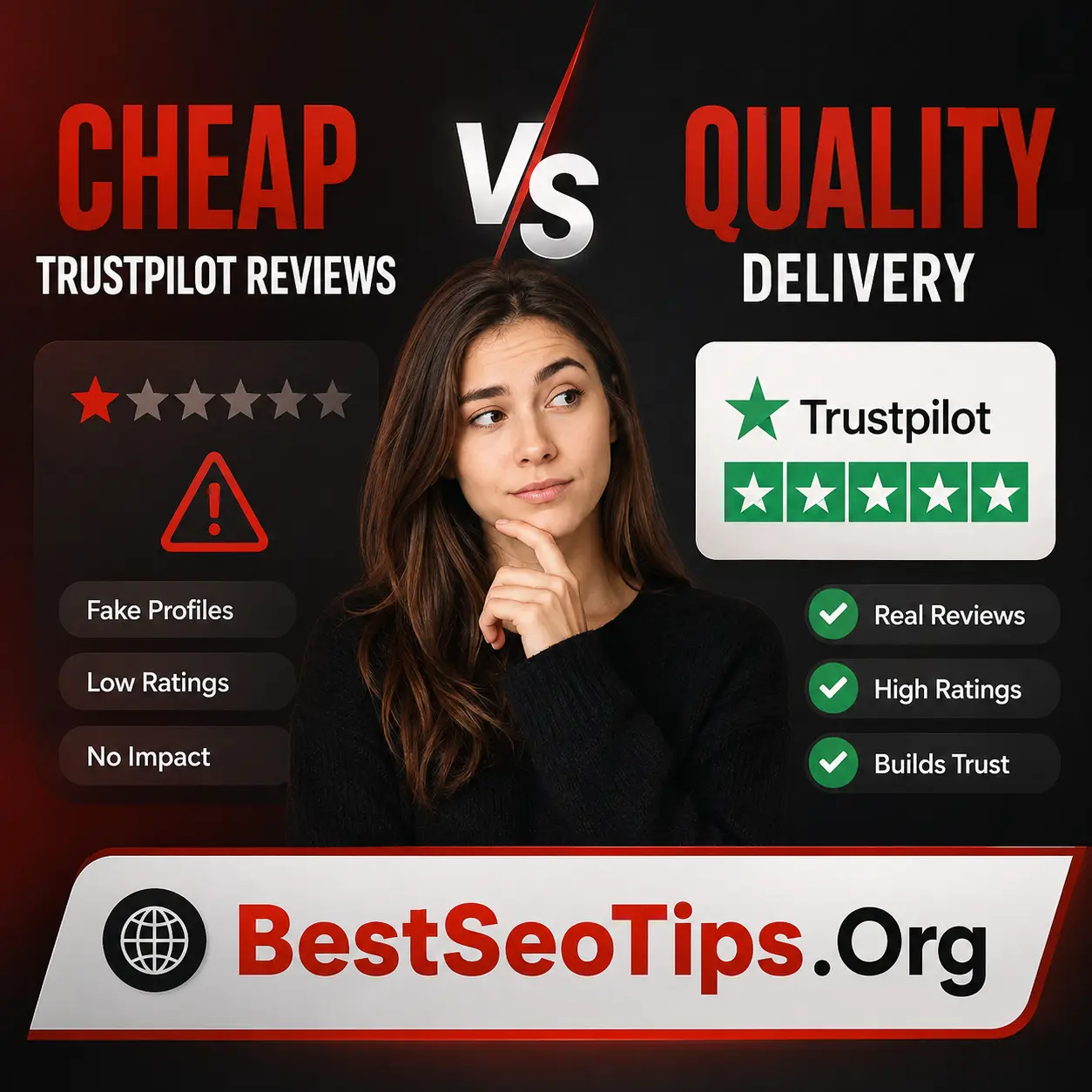
Cheap Trustpilot Reviews vs Quality Delivery in 2026
Cheap Trustpilot Reviews vs Quality Delivery
Cheap Trustpilot reviews may offer a quick boost in ratings, but they come with serious risks — including detection by Trustpilot’s fraud systems, account suspension, and legal penalties under consumer protection laws. Quality delivery, on the other hand, builds authentic customer trust that leads to genuine, lasting reviews. While buying reviews promises instant results, real service quality creates sustainable credibility that search engines and customers both recognize as trustworthy.
Cheap Trustpilot reviews may look tempting, but they carry real risks. Learn why quality delivery builds lasting trust and genuine 5-star reviews.
What Makes Trustpilot Essential for Businesses in the United States
For businesses in the United States, Trustpilot matters because customer reviews often shape first impressions before a shopper even visits an online store. A public profile with visible feedback can strengthen online reputation and make a company look more established.
At the same time, authentic reviews help buyers compare service quality, delivery, and support. Since so many people check reviews before spending money, businesses cannot ignore platforms that influence trust. To see why Trustpilot carries that much weight, it helps to look at how it affects decision-making, review behavior, and brand reputation.

Trustpilot’s Influence on Customer Decisions
When shoppers land on an online store, they often look for quick signals first. A visible star rating can shape opinion in seconds, even before they read product details or shipping terms. That is why Trustpilot has such a strong effect on consumer confidence.
Still, stars do not tell the whole story. A high score may reflect real customer satisfaction, but it can also reflect better review collection tools, faster responses, or selective outreach. Some businesses invite happy buyers at just the right moment, which can push ratings upward.
So, can Trustpilot reviews be trusted when making online shopping decisions? They can help, but only if you read beyond the headline number. Focus on recent comments, repeated themes, and how the business handles complaints. That fuller view is much more useful than trusting the score alone.
Why Online Reviews Matter in 2026
In 2026, online reviews are no longer optional reference points. They are part of how people shop, compare, and judge risk. Since most buyers check feedback before a purchase, one trustscore can influence sales, clicks, and brand perception almost instantly.
There is another side to this. A single negative review can carry more emotional weight than several average comments, especially if it mentions delays, poor support, or refund issues. Buyers remember specifics. That is why review platforms have become central to brand visibility.
Yet trust still depends on how you read them. Can Trustpilot reviews be trusted? Yes, as one signal among several. If you rely on them alone, you may miss bias, manipulation, or selective review collection. Smart shoppers now compare sources and treat patterns as stronger evidence than isolated praise or criticism.
The Role of Trust and Reputation for US Companies
For US companies, a public trustscore can affect more than image. It can influence conversion rates, repeat purchases, and whether a buyer gives a new brand a chance. Reputation now lives in search results, review platforms, and social proof seen before checkout.
That is why genuine reviews matter so much. They give buyers real insights into service, shipping, and support. But some people say Trustpilot cannot be fully trusted because not every review is verified through proof of purchase. Open platforms are useful, yet they also leave room for abuse.
A business with premium tools may collect and manage feedback more effectively than one with a free profile. That difference can shape reputation in ways many shoppers do not notice. Understanding that gap helps you judge the platform more fairly and avoid reading the trustscore as absolute truth.
Cheap Trustpilot Reviews: Risks and Realities
Cheap Trustpilot reviews often sound tempting, especially if your business needs quick social proof. The problem is that low-cost services are frequently tied to fake positive reviews, weak account quality, and patterns that detection systems can flag fast.
That creates real risk. Reviews may vanish, trigger harmful reviews in return, or damage trust when buyers notice odd behavior. Instead of solving negative feedback, cheap shortcuts can deepen it. To understand why, you need to look at the common mistakes, the signals of fake activity, and the long-term effect on credibility.
Common Pitfalls of Buying Low-Cost Reviews
Low-cost review packages usually focus on speed and volume, not safety. That is where trouble starts. If reviews appear in a tight burst, use generic language, or come from weak profiles, they can look like manipulation instead of real customer opinion.
You also face policy and reputation problems. A suspicious campaign may lead to removals, extra scrutiny, or a wave of negative review attention from users who spot the pattern. In some cases, low-quality providers may even post content that creates moderation issues.
Common pitfalls include:
- Sudden review bursts that look automated
- Repeated wording that signals manipulation
- Profiles with little history or weak verification
- Content that risks flagging for illegal content or rule violations
So, is it safe or ethical to buy reviews this way? Usually not. Cheap offers often trade short-term appearance for long-term trust damage, which is a bad deal for any business trying to grow steadily.
Understanding Fake vs. Genuine Review Signals
If you want to tell whether a review is real, start with patterns. Genuine reviews usually contain specific details, balanced language, and a believable timeline. Fake positive reviews often sound polished but vague, with little proof that the reviewer had a real interaction.
Trustpilot uses detection technology to catch suspicious behavior, but you should still check for warning signs yourself. A cluster of accounts with the same tone or activity window can be a strong clue that something is off.
Look for these signals:
- Reviewer accounts created very recently
- Similar phrases repeated across many reviews
- Unnatural timing, such as many posts within hours
- Little profile history outside one reviewed business
In short, genuine reviews tend to feel individual and grounded. Fake ones often feel coordinated. If the language, timing, and account behavior all look too neat, trust your instincts and compare with other sources.
How Cheap Reviews Impact Brand Credibility
Brand credibility is hard to build and easy to lose. Cheap reviews can damage online reputation because they often create patterns buyers recognize quickly. Once people doubt your review profile, they may question your service quality too.
There is also a platform risk. If removed reviews drag down your trustscore or expose inconsistent feedback history, your public page can look unstable. That hurts content integrity and makes even genuine praise seem less believable.
Cheap reviews can weaken credibility by:
- Creating obvious spikes in five-star activity
- Lowering confidence in your trustscore
- Making authentic customer reviews look staged
- Triggering deeper moderation or public doubt
So, is it ethical or safe? Not if it undermines trust. A business should protect its reputation with realistic, transparent methods instead of using shortcuts that may disappear and leave lasting damage behind.
Quality Delivery: What It Means When Purchasing Trustpilot Reviews
Quality delivery is not about flooding a page with praise. It means review activity looks natural, measured, and consistent with real customer behavior. In practice, that points to authentic reviews, believable pacing, and stronger profile quality rather than mass posting.
It also means protecting your brand from easy detection. Safer services focus on genuine feedback style, stable accounts, and review invitations or workflows that resemble normal customer interactions. The details matter, so the next sections break down what high-quality reviews should look like and how premium methods reduce deletion risk.
Characteristics of High-Quality, Verified Reviews
High-quality reviews feel believable because they include real insights, natural wording, and details tied to an actual experience. They do not read like ads. Instead, they sound like something a real customer would write after a purchase or service interaction.
Verification matters too. Trustpilot may ask for proof of purchase, a receipt, invoice, email, or even a reference number if a review is flagged. Reviews linked to direct invitations are often viewed as more reliable because they show a clearer connection between customer and transaction.
Strong review characteristics include:
- Specific details about service, timing, or support
- Balanced language rather than exaggerated praise
- A possible proof of purchase trail if questioned
- A believable reference number or order context
If you are judging quality, ask one simple question: does this sound like a real person describing a real event? That test filters out a lot of weak review content.
The Importance of Organic, Safe Review Practices
Organic reviews matter because they match the pace and variety of normal customer behavior. They do not arrive all at once, and they do not all say the same thing. That natural mix supports authenticity and makes a review profile more credible over time.
Safe review practices also reduce the appearance of manipulation. Trustpilot looks for bursts, copy patterns, account farms, and unusual location behavior. If your review growth looks forced, even positive comments may get extra scrutiny. That is why slow, steady activity is usually safer than aggressive volume.
Is it ethical or safe to pursue review growth? It is safer when the process respects transparency and avoids misleading signals. The goal should be to strengthen reputation without creating patterns that misrepresent customer opinion. When review activity looks natural, it is easier for buyers and platforms to trust it.
How Premium Services Avoid Trustpilot Deletion
Premium services reduce deletion risk by focusing on how reviews appear, not just how many appear. Natural pacing, stable profiles, and realistic language help reviews blend into normal platform behavior instead of standing out as a campaign.
They also prepare for moderation. If Trustpilot questions a review, stronger services understand the role of documentation, account history, and transparency. Since flagged reviews may need proof of an interaction, quality-focused methods avoid weak setups that collapse under review.
Another factor is delivery style. Review invitations are generally seen as more reliable because they mirror a post-purchase process. Premium providers try to align with those expectations rather than pushing obvious bursts. Trustpilot handles reports of fake or misleading reviews through algorithms, flags, and human checks, so providers that respect those realities are far less likely to trigger removals.
Key Features of Reliable Trustpilot Review Providers
Reliable providers stand out by focusing on profile quality, natural delivery, and regional relevance. Instead of random accounts, they use real & verified profiles that look consistent, active, and believable. That lowers the chance of obvious moderation issues.
They also pay attention to location data and audience fit. For many brands, geo-targeted reviews matter because a US business needs feedback that aligns with its actual market. Add custom content support and measured pacing, and you get a safer approach. The next sections explain these features in more detail.

Real & Verified Profiles Explained
Real & verified profiles are important because detection systems look beyond review text. They also examine the reviewer, account age, activity history, and whether behavior fits normal platform use. Weak accounts raise suspicion quickly, even if the wording looks polished.
For a reviewed business, that means the profile behind the review matters almost as much as the review itself. Stronger profiles show more believable use patterns and support better verification signals when moderation happens.
| Feature | Strong Profile Signal | Weak Profile Signal |
|---|---|---|
| Account history | Older activity across time | Newly created account |
| Reviewer pattern | Mixed, natural engagement | Only one business reviewed |
| Verification clues | Stable email and identity trail | Disposable-looking setup |
| Posting behavior | Spaced-out activity | Sudden bursts |
If you are asking how to spot a fake review, always check the reviewer profile. The review may look fine, but the account often tells the real story.
Geo-Targeted Review Benefits for U.S. Businesses
Geo-targeted reviews can make a review profile look more relevant and believable for a US business. If most of your customers are in the United States, reviews that match that market fit buyer expectations better than feedback appearing from unrelated regions.
Location data matters because Trustpilot systems may notice odd patterns. Reviews about a local or US-focused service posted from distant locations can raise questions, especially when paired with unusual timing or account behavior. IP addresses are one part of that wider pattern analysis.
Can Trustpilot reviews be trusted when making online shopping decisions? They are more useful when the geography makes sense. A business with localized, market-matched feedback usually appears more consistent than one with random global activity. For brands serving specific areas, geo-targeted reviews support a more natural reputation profile.
Custom Content and SEO-Friendly Review Creation
Custom review content helps a profile look less scripted. When each reviewer uses distinct wording and mentions different parts of the experience, the page feels more believable. That variety supports content integrity and makes reviews more useful for readers.
There is also an SEO benefit. Natural language around service quality, delivery, support, and product experience can reinforce brand relevance without sounding forced. Still, the key is balance. Over-optimized wording can look unnatural and defeat the purpose.
Useful custom content principles include:
- Write in a natural voice, not ad copy
- Mention specific service details where possible
- Vary sentence structure and emphasis by reviewer
- Keep SEO secondary to authenticity
If you want to tell whether a review is genuine or fake, read for individuality. Strong custom content sounds like a person talking. Weak content sounds like a template trying too hard to sell.
Trustpilot’s Review Moderation and Authenticity Efforts
Trustpilot does not leave review quality entirely to chance. It uses detection systems, account analysis, and review moderation to manage abuse across a huge volume of submissions. That matters because openness without controls would quickly invite spam and manipulation.
Even so, authenticity is an ongoing challenge. Not every review is checked before publication, and some sophisticated behavior can still pass initial filters. That is why Trustpilot relies on both technology and follow-up action. To understand the limits and strengths of that process, look at how fake reviews are detected, reviewed, and enforced.
How Trustpilot Detects and Handles Fake Reviews
Trustpilot uses detection technology and algorithms to scan reviews for suspicious signals. These can include review bursts, repeated wording, unusual account activity, shared IP addresses, and behavior linked to account farms. Automated checks do a large share of the early filtering.
Once something looks suspicious, moderation may escalate. Reviews can be flagged by users, businesses, or the platform itself. At that point, Trustpilot may ask the reviewer for evidence of a real transaction or service interaction before deciding whether the content stays live.
So how does Trustpilot handle reports of fake or misleading reviews? It combines automated pattern detection with human moderation and documentation requests. That system removes many false reviews, but it is not perfect. Sophisticated abuse can still slip through, which is why readers should use independent judgment along with platform signals.
Transparency in Trustpilot’s Review Moderation Process
Trustpilot shows some openness by explaining that it uses automation, human teams, and review flags to manage abuse. It also publishes trust reports with removal numbers, which helps users understand that moderation is active rather than hidden.
Still, transparency has limits. Buyers and businesses do not always see every step behind a moderation decision, and that can create frustration. If a review is challenged, documentation may be requested, but the full internal logic of the decision process is not always visible from the outside.
So, how transparent is the review moderation process? Fairly open in broad terms, but not complete in every case. There is enough information to understand the system’s purpose, yet not enough to remove every concern. That partial fairness is useful, but it still requires readers to stay alert and think critically.
Steps Trustpilot Takes to Maintain Authenticity
Trustpilot works to protect authenticity through layered controls. It monitors suspicious behavior, allows community reporting, reviews flagged content, and may request proof of transaction. These steps are designed to keep the platform open without letting abuse take over completely.
The system also relies on enforcement. Reviews that break rules can be removed, and serious misuse may bring stronger consequences. While no platform catches everything, Trustpilot’s approach shows that authenticity depends on repeated checks rather than one simple filter.
Key steps include:
- Automated scans for suspicious patterns
- Human moderation on flagged cases
- Documentation requests from reviewers
- Escalation and possible legal action in serious abuse matters
If you ask what steps Trustpilot takes to ensure authenticity, the answer is layered moderation. It is not flawless, but it is more than just letting anyone post without review.
Ethical Considerations and Smart Buying Strategies
Buying reviews raises real ethical questions because public ratings influence spending, trust, and brand choices. If reviews create a false picture of customer satisfaction, fairness suffers and buyers may make decisions on misleading information.
That does not mean every budget-conscious approach is reckless. Smart strategies focus on transparency, lower risk, and long-term reputation rather than shortcuts that invite legal action or moderation trouble. To judge what is acceptable, you need to separate harmful manipulation from safer reputation-building practices and learn how to balance cost with credibility.
Is Purchasing Reviews Safe and Ethical?
The safest answer is simple: buying reviews becomes risky when it misleads customers or creates a false picture of service quality. That affects fairness and weakens authenticity, especially if the reviews are not tied to real experiences or believable activity.
There is also a compliance angle. Platforms monitor misuse, and repeated abuse can lead to removals, stronger scrutiny, or in serious cases, legal action. That is why businesses should think beyond short-term star gains and ask what message their review strategy sends.
Key questions to ask are:
- Does this method protect transparency?
- Would the review pattern look honest to a buyer?
- Could it trigger moderation or legal action?
- Does it support authenticity instead of deception?
If the answer is no, the strategy is not safe. Ethical review building should strengthen trust, not manufacture it.
Balancing Budget and Quality Without Compromise
Many businesses face the same problem: they want a stronger trustscore but do not want to waste money on risky services. The good news is that budget and quality do not always conflict. The real issue is whether the provider focuses on safe methods or cheap volume.
Premium services and subscriptions often cost more because they emphasize pacing, profile quality, and lower-risk delivery. That extra care can protect your page from drops and keep your review profile looking stable over time. In that sense, smart budgeting is about efficiency, not the lowest possible price.
A balanced approach usually includes:
- Steady delivery instead of review floods
- Better account quality over raw volume
- Market-matched review patterns
- Support for natural-looking content
So, can you balance cost and quality? Yes, if you treat review building as reputation management, not a race to buy the cheapest stars available.
Building Long-Term Trust through Smart Review Practices
Long-term trust comes from consistency. Buyers are more likely to trust a business with steady, believable review growth than one with sudden bursts of perfect feedback. That is because genuine feedback creates a more natural picture of customer experience over time.
Smart review practices also protect content integrity. When comments look varied, recent, and tied to realistic service details, they support credibility instead of raising suspicion. Add openness in communication, and your public profile becomes more resilient even when criticism appears.
Is this the safer path? Yes. Businesses that focus on sustainable review habits usually protect their reputation better than those chasing shortcuts. A stable profile, realistic sentiment, and visible responsiveness do more for trust than any quick boost ever will.
Recognizing Red Flags and Protecting Your Business
Spotting red flags early can save your business from reputation damage and wasted money. Many suspicious reviews leave traces through timing, language, account quality, or odd profile behavior. If you know the warning signs, manipulation becomes easier to catch.
That matters whether you are reviewing your own page or checking competitors and vendors. It also helps when unfair negative feedback appears. The next sections cover what non-genuine reviews often look like, how to detect manipulated patterns, and what to do if honest content is removed or drops without warning.
Warning Signs of Non-Genuine Trustpilot Reviews
Non-genuine reviews often look simple on the surface but strange when you inspect them closely. The wording may be overly generic, the timeline may be too concentrated, or the account may show little history. Detection systems look for exactly those patterns.
You should also watch for reviews that seem designed to provoke moderation issues. Sometimes suspicious content includes extreme claims, repeated scripts, or language that edges toward policy violations. That can create risk even before a final decision is made.
Common warning signs include:
- Several reviews posted in a narrow time window
- Nearly identical language across accounts
- Reviewer profiles with no believable history
- Mentions that drift into illegal content or obvious manipulation
If you see multiple red flags together, take a step back. One odd review may mean little, but a pattern usually tells you much more about whether the feedback is genuine.
How to Spot Manipulated Feedback
Manipulated feedback usually reveals itself through patterns, not one comment alone. Start with timing. If reviews arrive in bursts, especially after long silence, that may point to organized activity. Analytics can help you notice those unusual shifts more clearly.
Next, compare tone and structure. Real customers rarely sound identical. If many comments repeat the same praise points or phrase order, the feedback may be coordinated. Also check whether review invitations explain the spike. If there is no obvious business event, the pattern deserves a closer look.
Here are useful checks:
- Review date clusters that look unnatural
- Repeated wording across many comments
- Account behavior with thin history
- Sharp spikes without clear review invitations
The goal is not to distrust everything. It is to read critically. When timing, wording, and account data all point in the same direction, manipulation becomes much easier to spot.
Responding to Unfair Review Removal or Drops
If your honest review gets removed, start by checking whether Trustpilot requested more information. In many cases, the issue comes down to documentation. A receipt, order confirmation, service email, or other proof can help support the review and show the interaction really happened.
After that, respond calmly and clearly. Transparency matters. Provide what is requested, explain the timeline, and avoid emotional language that does not help your case. If you are a business facing review drops, keep records of invitations, customer interactions, and any communication tied to the review.
What should you do next if the problem continues? Follow the platform’s process first. If the matter involves serious reputational harm or false claims, some cases may move toward legal action, but documentation and clear communication should always come first.
Alternatives and Supplementary Platforms for Genuine Reviews
Trustpilot is useful, but it should not be the only place you check. Alternative platforms can reveal patterns that one site misses, especially when review collection methods differ from platform to platform. That makes cross-checking a smart habit.
Google is an obvious second source, and reddit can add candid conversations from commenters with no clear incentive to flatter a brand. Looking across several channels gives you a wider picture of service quality and customer sentiment. The next sections show how platforms compare and how to use them together more effectively.
Comparing Trustpilot with Other Review Platforms
Different review platforms offer different strengths. Trustpilot is broad and highly visible, which makes it influential. Google is useful for local intent and quick comparisons. Other review platforms or forums can expose concerns that may not appear in polished public profiles.
No single source guarantees authenticity. That is why comparison matters. If the same themes appear across multiple channels, confidence rises. If one platform looks unusually positive while others are mixed, you should investigate further.
| Platform | Main Strength | Main Limitation |
|---|---|---|
| Trustpilot | High visibility, broad reach | Open model can invite abuse |
| Strong local relevance | Less depth in some cases | |
| Candid user discussion | Less structured review format | |
| Other forums/sites | Niche detail and context | Mixed moderation quality |
The best alternative strategy is not replacement. It is combination. Cross-reference platforms to judge authenticity more accurately.
Leveraging Multiple Sources for Consumer Confidence
Consumer confidence grows when you compare signals instead of relying on one rating. Trustpilot may show the public score, but other channels often reveal missing context. That is especially useful when a business has a suspiciously polished page.
Reddit can help here because commenters tend to speak more casually and with less formal brand pressure. You may not get neat star ratings, but you often get specifics about service failures, delivery issues, or whether praise feels deserved.
A strong cross-check routine includes:
- Trustpilot for public reputation trends
- Google for local and transactional feedback
- Reddit for open discussion and context
- One extra niche source for confirmation
What alternatives exist for genuine reviews? The answer is not one perfect platform. It is a mix of sources that, together, help you see a business more clearly.

How to Encourage Authentic Customer Feedback Independently
If you want stronger social proof without overrelying on one platform, encourage authentic reviews directly from real customers. The most reliable path is a simple, consistent request after a transaction or service interaction.
Review invitations are helpful because they create a clearer connection between the customer and the experience. They also reduce the chance that only highly emotional buyers leave feedback. That gives you a more balanced picture of genuine feedback over time.
Good independent practices include:
- Send review invitations after real purchases
- Ask every customer, not just happy ones
- Keep the request neutral and simple
- Save records in case verification is needed
How can you tell if a review is genuine or fake? Independent collection helps because it creates cleaner review trails. The more transparent the request process, the more believable the result.
Frequently Asked Questions
How can I identify if a Trustpilot review is genuine or fake?
Check the details behind the trustscore. Genuine reviews usually include specific experiences, varied wording, and believable timing. Watch for manipulation such as review bursts, repeated phrases, or empty profiles. Trustpilot’s detection technology helps, but your own review of authenticity signals is still important.
What should I do if my honest review is removed by Trustpilot?
Start by reviewing any moderation message and provide documentation such as receipts, emails, or order details. Keep your response clear and focused on transparency. If the issue involves negative feedback that was genuine, follow the appeal process first. Legal action should only be considered in serious, unresolved cases.
Are Trustpilot reviews trustworthy for US online shoppers?
They can be helpful, but not on their own. US shoppers should treat the trustscore as a starting point, then read for real insights, check the reviewer profile, and compare with Google or another source. That extra step protects content integrity and gives a stronger view of online reputation.
Conclusion
In summary, navigating the complex landscape of Trustpilot reviews doesn’t have to be a daunting task. Understanding the distinction between cheap and quality reviews is essential for safeguarding your brand’s reputation in 2026. By prioritizing genuine, verified feedback over low-cost alternatives, you not only enhance your credibility but also build lasting trust with your customers. Remember, the right review strategy not only boosts your online presence but also drives consumer confidence. As you explore your options, consider investing in premium services that align with your ethical standards while delivering sustainable results. For further assistance, feel free to reach out for a personalized consultation to discuss the best strategies tailored to your business needs.

Amy Evans
Amy Evans is a digital content writer. She focuses on Trustpilot and how companies can manage what people say about them online. She writes helpful guides on Trustpilot reviews, TrustScore, business profiles, inviting people to write reviews, replying to customer feedback, negative reviews, and Trustpilot's rules. Amy wants to make Trustpilot easy to understand. She helps businesses use what customers say to build trust, improve their online reputation, and grow steadily.