The Real Truth About Trustpilot: Are Trustpilot Reviews Reliable?
Trustpilot is a legitimate online review platform where consumers can share feedback about businesses based on genuine experiences. However, a Trustpilot profile or high TrustScore should not be treated as an automatic guarantee that a company is trustworthy. Trustpilot uses automated detection systems and other safeguards to identify fake or policy-violating reviews, while businesses and consumers can flag suspicious content. Businesses can also invite customers to leave reviews, but invitations must be fair, consistent, and unbiased.
What You Should Know About Trustpilot
- Trustpilot reviews should be based on genuine experiences.
- Fake reviews are prohibited and can be removed when detected.
- Businesses cannot simply pay to remove negative reviews.
- Trustpilot uses automated systems to detect suspicious reviews.
- A high TrustScore does not guarantee that every customer had a positive experience.
- Reading both positive and negative reviews gives a more balanced picture.
- Businesses can respond to customer reviews and address complaints publicly.
- Consumers should consider the details, dates, patterns, and context of reviews before making a decision.
Understanding Trustpilot: Purpose and Platform Functionality
Trustpilot Group plc runs one of the biggest review sites online. Founded in Denmark and listed on the London Stock Exchange, it operates as a single platform for user-generated content about businesses across many industries.
So, is Trustpilot a reliable source for honest customer reviews? In broad terms, yes, but only with caution. Its business model allows open participation at scale, which makes trustpilot reviews useful for trend spotting. At the same time, that openness means you should treat it as one signal among several review sites, not final proof on its own.
How Trustpilot Collects and Publishes Customer Reviews
Trustpilot collects reviews in more than one way. Some are organic, meaning a person finds the business profile and posts feedback directly. Others are invited reviews, often sent after a company shares an email address through an automated feedback setup tied to order messages.
Here is the important part: an invited review is not always the same as proof of purchase in the way many shoppers assume. Trustpilot may connect the review to customer data supplied by the business, but that does not mean an independent payment check happened. That gap matters when you read star ratings.
Once submitted, reviews are published to the company’s business profile unless they are caught by filters or later flagged. This system gives people a place to discuss customer service and real experiences, but authenticity depends heavily on the quality of the underlying verification and moderation process.
The Role of the Open-Review System on Trustpilot
Trustpilot runs as an open platform, which means anyone can review a business whether or not that company pays for extra tools. That structure helps explain its reach. With millions of monthly active users, the site can gather a huge amount of honest feedback very quickly.
At the same time, this open system creates tension. A person with a genuine experience can speak up without barriers, which is useful for consumers. Yet the same openness also lets bad actors try to post fake positives or unfair attacks. That is why moderation becomes such a major issue.
Yes, there are common complaints about review moderation policies. Some users say honest criticism gets flagged, while some businesses say false posts stay live too long. Those complaints do not cancel the platform’s value, but they show why you should read Trustpilot with context instead of blind trust.
Are Trustpilot Reviews Real? Exploring Review Authenticity
Many Trustpilot reviews are real, especially when you look at large businesses with heavy review volume. In those cases, trustpilot ratings can point you in the right direction because broad patterns are harder to fake at scale.
Still, authenticity is not guaranteed for every post. The platform’s own reporting shows fake reviews remain a constant issue, and critics point to paid business tools as a possible source of bias concerns. Add in selective invitations, negative feedback disputes, and weak assumptions around “verified” labels, and you get a platform that is useful but not beyond question.
Verified Reviews vs. Unverified Reviews Explained
On many review platforms, shoppers assume verified reviews mean a confirmed purchase. On Trustpilot, that label can mean something narrower. In many cases, it simply means the business invited the reviewer through a unique link or shared customer details for the request.
That form of verification is better than nothing, but it is not the same as independent transaction confirmation. Trustpilot may rely on the business’s own records, email flow, or later documentation during a dispute. So while verified reviews can carry more weight than unverified ones, they should not be treated as perfect evidence.
Unverified reviews are posted directly by users without transaction confirmation. Some are genuine. Some may not be. If you want a clearer picture, compare both types, look for specifics, and remember that verification on review platforms can vary a lot from one site to another.
Common Red Flags of Fake or Manipulated Reviews
You do not need forensic tools to spot warning signs. On review sites, fake reviews often follow patterns that feel too neat, too vague, or too sudden. A little skepticism can save you from trusting manipulated feedback.
Watch the timing, wording, and reviewer behavior. Trustpilot and other platforms use systems that examine signals such as IP address patterns and bursts of activity, but shoppers can often catch obvious issues by reading closely.
Some common red flags include:
- Generic praise with no product, service, or timeline details
- Sudden review spikes after long quiet periods
- New reviewer profiles with only one post
- Repeated wording across multiple comments
- Extreme star patterns with only 5-star and 1-star posts
If you want reliable Trustpilot reviews, focus less on the average score and more on whether the comments sound specific, varied, and grounded in a believable customer experience.
Trustpilot’s Methods for Detecting and Managing Fake Reviews
Trustpilot uses both automated detection and human review to manage trustpilot reviews that may be false. Its published figures show millions of suspicious submissions removed, which tells you the fake-review problem is large but also actively monitored.
A big part of that work falls to the Content Integrity Team and technical systems designed to protect content integrity. These safeguards target fake positives, misleading posts, and other suspicious activity before or after publication. Even so, no system catches everything, which is why the limits matter just as much as the safeguards.
Automated Technology and Manual Moderation Systems
Trustpilot says most fake-review detection starts with automated technology. At submission, algorithms scan for unusual patterns linked to fraud, such as review bursts, repeated wording, device signals, and other signs that a bot or organized campaign may be involved.
Another key signal is IP clustering. If many reviews come from the same network area or show linked behavior, the system may flag them for review. This first layer matters because the platform handles a massive volume of content, and manual checks alone would be too slow.
When automation raises concerns, manual moderation takes over. The Content Integrity Team investigates flagged cases, reviews disputes, and decides whether content should stay up or be removed under policy rules. That mix of algorithms and human judgment is Trustpilot’s main safeguard, even though it cannot fully eliminate mistakes or missed fakes.
Limitations and Challenges in Identifying Fraudulent Activity
Even with strong detection tools, spotting fraudulent activity is hard. Bad actors adapt quickly. They vary language, spread posts across accounts, and avoid obvious patterns that older filters might catch. That means some fake content still appears before action is taken.
There is also a basic moderation challenge: a real customer can write something unfair, and a fake reviewer can sound convincing. Content integrity checks help, but they do not turn every review into a proven fact. In open systems, certainty is limited by design.
These limitations explain why both consumers and businesses get frustrated. Some genuine reviews are flagged. Some suspicious ones remain live longer than expected. Trustpilot’s safeguards are real, but they work in an environment where speed, scale, and deception constantly collide. That is why the platform is best read as a pattern tool, not a guarantee engine.
Business Influence on Negative and Positive Reviews
Businesses cannot simply buy a cleaner record by paying Trustpilot to delete criticism. Based on the compiled information, negative reviews stay unless they break platform rules, even if the company strongly disagrees with them.
That said, the business model still raises fair questions. Companies can influence the mix of positive reviews and complaints by deciding who gets invited to review them. A brand may ask happy customers more often than unhappy ones. That selective visibility can shape public perception, social media conversations, and even the TrustScore without directly removing valid criticism.
The Process for Businesses Requesting Review Removal
A business can request review removal, but not just because it dislikes negative reviews. It must flag the post and claim it breaks Trustpilot rules, such as conflicts of interest, false claims, or other guideline violations. The review then goes through a review process.
In some cases, the reviewer may be asked for proof of purchase or other documentation to support the claim. That can create friction, especially when a real customer no longer has records handy. Still, the platform says this process is about rule enforcement, not reputation management.
So, can companies pay to remove negative Trustpilot reviews? The compiled information says no. Businesses cannot unilaterally wipe criticism from a business profile. They can only request review removal through formal channels, and the content stays unless Trustpilot finds a policy reason to take it offline.
Transparency, Bias, and the Effect on Trustpilot’s TrustScore
Concerns about bias usually center on transparency and incentives. Critics argue that if subscribed businesses get better tools for flagging and managing disputes, outcomes may tilt in favor of paying clients even if the written rules stay the same.
That does not prove direct manipulation of the Trustpilot TrustScore, but it does affect public perception. Another issue is selective invitations. If a company asks mainly satisfied buyers for reviews, the resulting score may look stronger than the full customer picture would suggest. That is influence without outright score tampering.
The main evidence that people cite when calling Trustpilot untrustworthy is structural rather than dramatic: open posting, fake-review slippage, disputed removals, and a business-facing paid model. None of that means every score is false. It means the TrustScore should be read with healthy skepticism and not in isolation.
How to Evaluate a Trustpilot Profile Before Buying
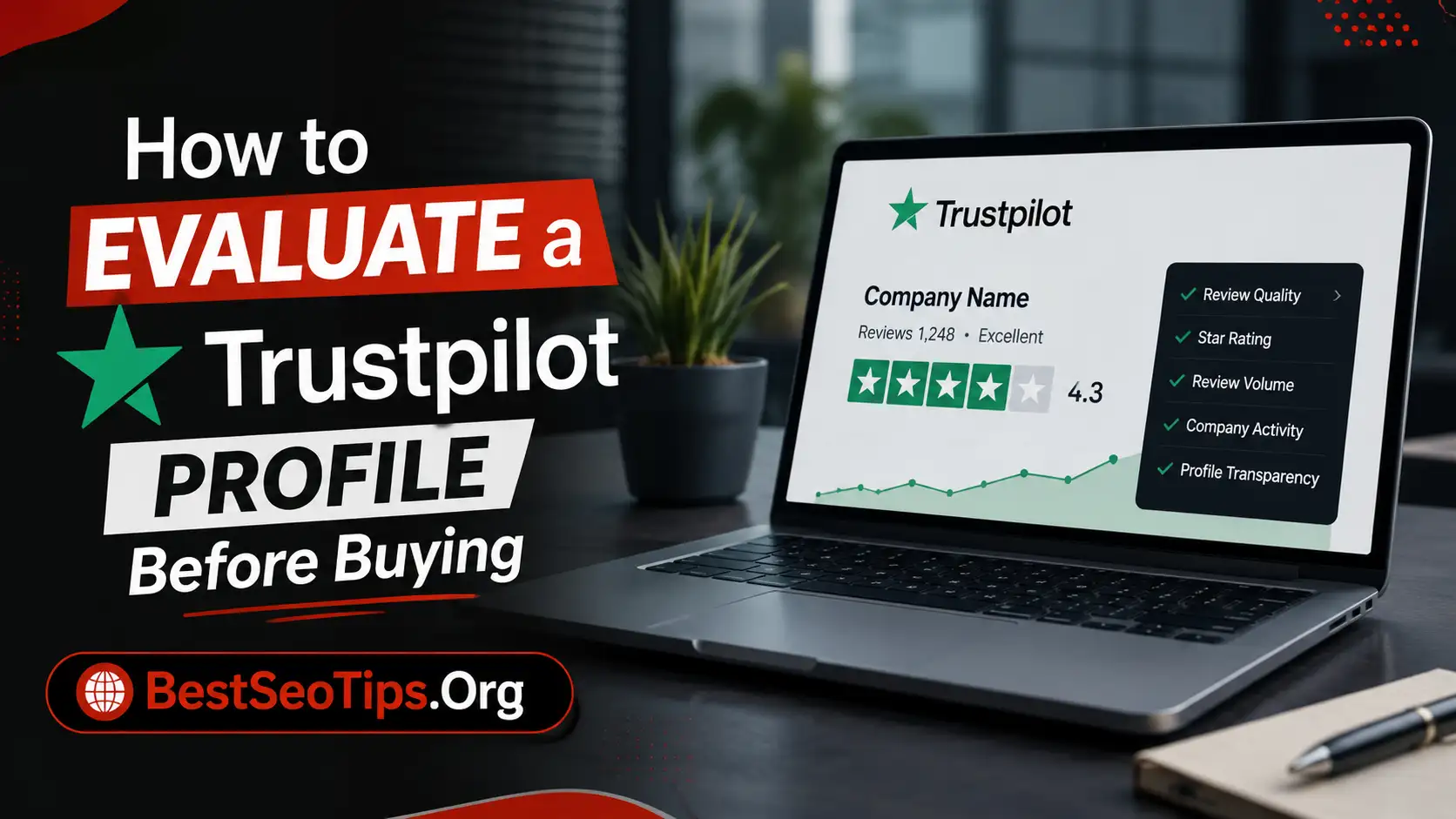
Before you trust trustpilot ratings, slow down and inspect the full business profile. A high score can offer useful social proof, but it does not automatically protect you from scams, selective invitations, or misleading patterns.
Start by reading beyond the headline number. Look at review volume, timing, detail, and whether complaints repeat the same issue. Honest feedback usually has texture. If everything looks too polished or too extreme, take that as a cue to dig deeper. The next two sections show exactly how to read the profile with a more balanced eye.
Reading Both Positive and Negative Reviews for a Balanced View
A high score can feel reassuring, especially during online shopping. But you should not trust a strong rating until you read both positive reviews and negative reviews. The score tells you the average. The comments tell you the story.
Start with the low and mid-range posts. Repeated complaints about shipping, refunds, or customer service are often more useful than a hundred short compliments. Then check the better reviews and ask a simple question: do they mention real details, or just broad praise? That difference matters across review sites.
A balanced view comes from comparing both sides. If criticism is specific but praise is vague, be cautious. If the same strengths and weaknesses appear again and again, that pattern is more reliable than the TrustScore alone. In short, treat the number as an introduction, not a final answer.
Signs of Credibility and What to Watch Out For
Credibility on Trustpilot comes from patterns, not one shiny signal. A badge or label may look like a universal symbol of trust, but real authenticity usually shows up through consistency, detail, and a believable mix of opinions.
Try to judge whether the profile reflects honest feedback from different types of buyers. You are looking for signs that the company’s rating grew naturally over time, not through a short campaign or selective invitation push.
Here are a few signs to look for:
- Detailed reviews that mention products, timing, or support interactions
- A natural mix of praise, criticism, and middle-ground ratings
- Professional responses to complaints from the business
- Steady review activity instead of sudden bursts
- No obvious warning signs of copied wording or empty accounts
When several of those signals appear together, the profile usually has stronger credibility than one built on perfect scores and shallow comments.
Comparing Trustpilot with Other Major Review Platforms
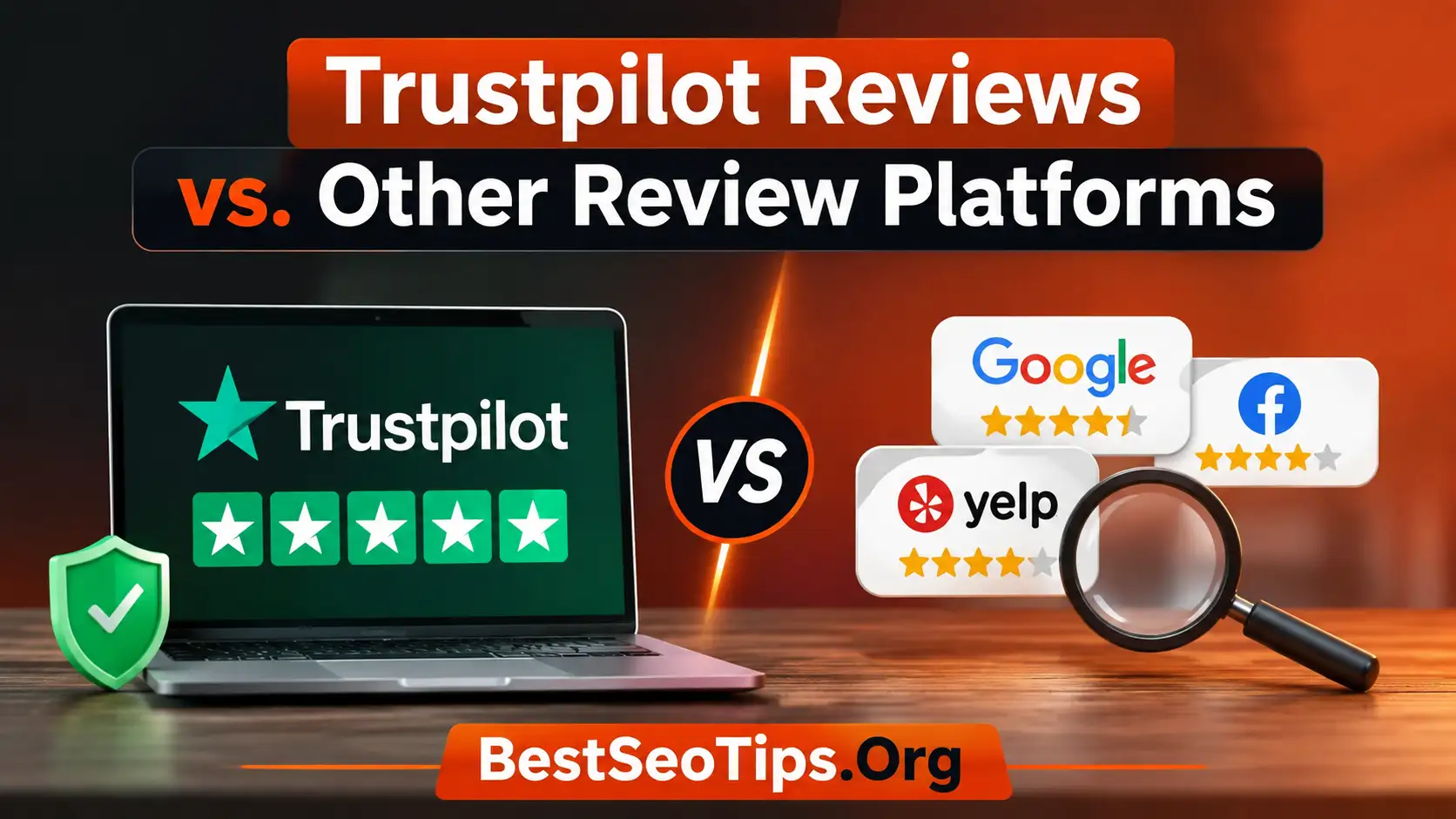
Trustpilot sits somewhere in the middle when you compare major review platforms. It offers broader business profiles and more visible moderation systems than some rivals, but it still struggles with open-access weaknesses and review disputes.
Google Reviews has huge reach, Yelp has local influence, Amazon focuses on marketplace items, Tripadvisor serves travel, and the Better Business Bureau leans into complaints and business records. Trustpilot stands out for scale and transparency reporting, yet it should still be checked against other sources. Credibility improves when the same pattern appears across more than one platform.
Key Differences in Review Moderation and Verification
Different review platforms solve the same problem in different ways. Trustpilot puts more emphasis on review moderation and public fraud reporting than some large rivals, but its verification still does not always mean a payment was independently confirmed.
Google Reviews offers huge visibility, but the compiled information describes weaker moderation and little purchase proof. The Better Business Bureau provides complaint context, while other platforms often focus on local or category-specific use cases rather than one broad trust model.
Here is a simple comparison:
| Platform | Main Strength | Verification Style | Moderation Notes |
|---|---|---|---|
| Trustpilot | Global brand research | Invited or open reviews; not always purchase-confirmed | Stronger fraud systems and transparency reports |
| Google Reviews | Search and Maps visibility | No proof of purchase required | Weaker fake-review detection in the compiled material |
| Better Business Bureau | Complaint resolution context | Business listing based, not purchase-focused | Useful for dispute history |
| Yelp | Local business discovery | User-posted reviews | Local strength, different moderation style |
| Tripadvisor | Travel decisions | User-submitted travel feedback | Best for travel-specific patterns |
Factors That Impact Overall Credibility and Trust
Credibility depends on more than star ratings. A platform earns trust when it explains how reviews are collected, how abuse is handled, and what limits still exist. That is why transparency matters so much in online reputation systems.
Trustpilot has an advantage here because it publishes more about fake-review removals than many competitors. Still, its business model creates extra questions because companies can pay for tools that help manage review activity. Even if the rules stay the same, the different access level can affect how people judge fairness.
In practice, overall trust comes from combining signals. A platform with high visibility but weak moderation may be less helpful than one with better controls but smaller reach. The best approach is simple: use trustpilot as one source, then compare it with Google, the Better Business Bureau, and any niche platform that fits the business category.
What the TrustScore Really Means for Consumers
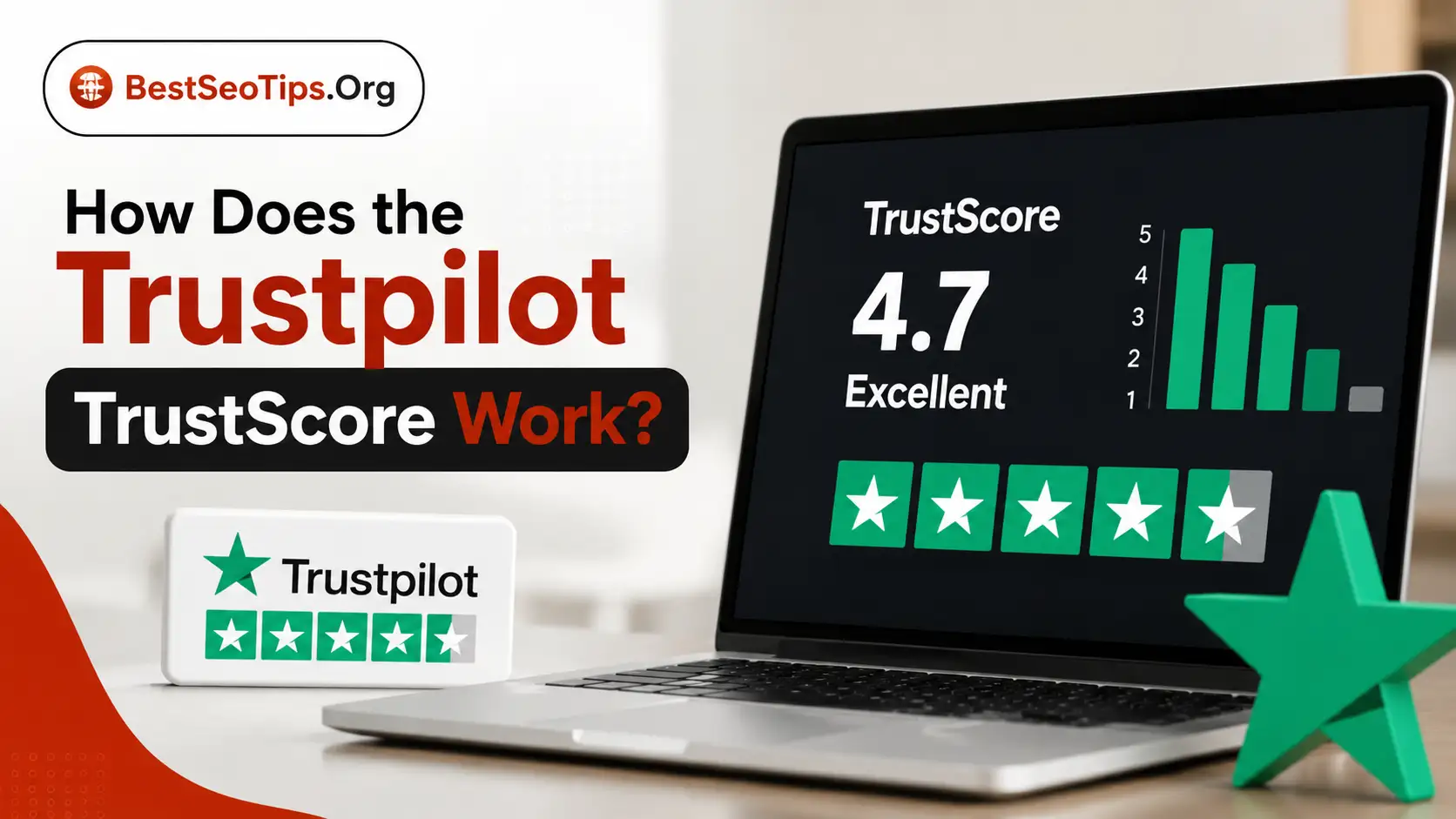
The TrustScore is a quick summary, not a full safety check. It turns trustpilot reviews and star ratings into a number that can shape consumer trust in seconds, which is why so many shoppers focus on it first.
That makes it useful, but also risky if you stop there. Before trusting a company, ask how many reviews the score is based on, whether the feedback seems selective, and what the low-star comments say. A TrustScore can point you toward a different story once you read the details behind it.
Calculating the TrustScore: Factors and Interpretation
Trustpilot uses algorithms to turn submitted reviews into its headline rating. At the simplest level, the Trustpilot TrustScore reflects star ratings across the business profile, but interpretation matters just as much as calculation.
A strong score based on thousands of reviews usually tells you more than a near-perfect score built on a small sample. Volume helps because individual fakes have less power when a company has a long review history. That is why large businesses often show more stable patterns than smaller ones.
Still, the number is only part of the picture. Trustpilot includes both invited and open reviews, and the platform’s own structure can shape who posts in the first place. So when you interpret the score, look beyond the average. Review count, timing, and comment quality are what help turn a rating into a useful buying signal.
Should You Trust a High TrustScore When Shopping Online?
A high Trustpilot TrustScore can help during online shopping, but it should never end your research. Think of it as social proof that invites a closer look, not proof that every customer had a great experience.
The smartest move is to test the score against the review content. Read recent negative reviews. Check whether the company replies professionally. Look for repeated issues around delivery, refunds, or support. If those complaints are detailed and consistent, they may matter more than the average number on the page.
You should also compare Trustpilot with another source before buying. A strong score backed by similar patterns on Google Reviews or the Better Business Bureau is more convincing. A high score surrounded by weak detail, sudden review bursts, or cross-platform complaints deserves caution. Trust the pattern, not just the promise.
Frequently Asked Questions
Can companies pay to remove negative Trustpilot reviews?
No. Based on the compiled information, companies cannot pay Trustpilot for review removal just because they dislike negative reviews. Under its business model, they can flag content for possible manipulation or rule violations, but Trustpilot decides whether the review stays or goes after review.
How does Trustpilot respond to criticism about review removals?
Trustpilot points to published rules, transparency reporting, and its Content Integrity team to explain review removals. It says negative reviews are not removed simply for being critical. Instead, action is tied to policy issues, though users still debate whether that process feels fair on every business profile.
What should I look for to spot reliable Trustpilot reviews?
Look for detail, consistency, and a natural mix of scores. Reliable reviews usually mention specific products, timelines, or service issues. On review sites, major red flags include vague praise, sudden review spikes, copied wording, and empty reviewer accounts. With trustpilot reviews, patterns matter more than any single comment.
Conclusion
In summary, understanding Trustpilot and its review system is crucial for making informed decisions as a consumer. By recognizing how reviews are collected, the authenticity of verified versus unverified feedback, and the methods in place to detect fake reviews, you can better navigate the landscape of online testimonials. Additionally, considering both positive and negative feedback provides a balanced perspective, helping you evaluate a company’s credibility effectively. Remember, a high TrustScore doesn’t always guarantee a trustworthy business, so take the time to assess reviews critically. For further insights or personalized guidance, feel free to reach out and get a free consultation with our experts.

Amy Evans
Amy Evans is a digital content writer. She focuses on Trustpilot and how companies can manage what people say about them online. She writes helpful guides on Trustpilot reviews, TrustScore, business profiles, inviting people to write reviews, replying to customer feedback, negative reviews, and Trustpilot's rules. Amy wants to make Trustpilot easy to understand. She helps businesses use what customers say to build trust, improve their online reputation, and grow steadily.