
Review Health Score: 7 Key Metrics to Track (2026)
Review Health Score: Key Metrics to Track
A review health score is a composite metric that measures how well a business is managing its online reputation. It combines four core signals: average rating, review velocity (how fast new reviews come in), response rate (how many reviews get a reply), and sentiment (the tone of customer feedback). Together, these metrics show whether a business’s reputation is improving, stable, or declining over time.
- Average Rating – overall star rating across platforms
- Review Velocity – rate of new reviews per week/month
- Response Rate – % of reviews replied to
- Sentiment Score – positive vs. negative tone in review text
- Review Recency – how fresh your most recent reviews are
- Platform Distribution – spread across Google, Trustpilot, G2, etc.
Understanding Review Health Score: Definition and Importance
A review health score is a structured way to measure the strength of your public review profile. Instead of relying on one number, it combines signals such as freshness, response activity, sentiment, and volume to show how your customer experience appears over time.
That matters because customer health scoring works best when it reflects real behavior. A strong review health score helps customer success efforts by revealing friction, supporting better customer relationships, and highlighting where action is needed before issues harm trust or retention.
What Sets Review Health Scores Apart from Star Ratings
Star ratings give you a snapshot. A review health score gives you a pattern. That difference matters because customer satisfaction is not fixed. It changes with every support exchange, product issue, and customer feedback moment. If your rating stays high but your recent reviews turn negative, the average can hide a problem.
Think of a health score as a broader signal. It reflects whether people are still talking about your brand, whether they are hearing back from you, and whether the tone of reviews is improving or slipping. This gives you a clearer view of customer experience.
In business terms, a customer health score is important because it helps you track what is actually happening now. It supports better decisions, stronger prioritization, and earlier action than a star rating can offer on its own.
Why Tracking Review Health Scores Matters for Businesses in 2026
In 2026, review trends move faster than ever. Customers compare options quickly, and older feedback loses impact. That means your business outcomes depend not only on what people said in the past, but also on what they are saying now and how you respond.
Tracking review health scores helps you spot churn risk signals early. A slowdown in new reviews, rising complaints, or poor reply habits can point to weaker customer retention. When you catch those shifts early, you can act before they grow into larger reputation issues.
Different companies use different metrics because business growth does not look the same for everyone. A SaaS business may care more about support-related reviews, while local service brands may focus more on review volume and recency. The score should match your customer loyalty goals and operating reality.
Core Metrics That Influence Review Health Score
A useful review score depends on the right inputs. Good health scoring does not guess. It uses customer data from review platforms, response activity, and sentiment patterns to show whether your reputation is stable, improving, or at risk.
While review metrics differ from product usage metrics, the logic is similar. You need signals that reflect real behavior. The most practical indicators include velocity, recency, responsiveness, volume, sentiment, cross-platform consistency, and authenticity. Each one adds context that raw customer feedback cannot provide alone.
Review Velocity: Tracking New Reviews Over Time
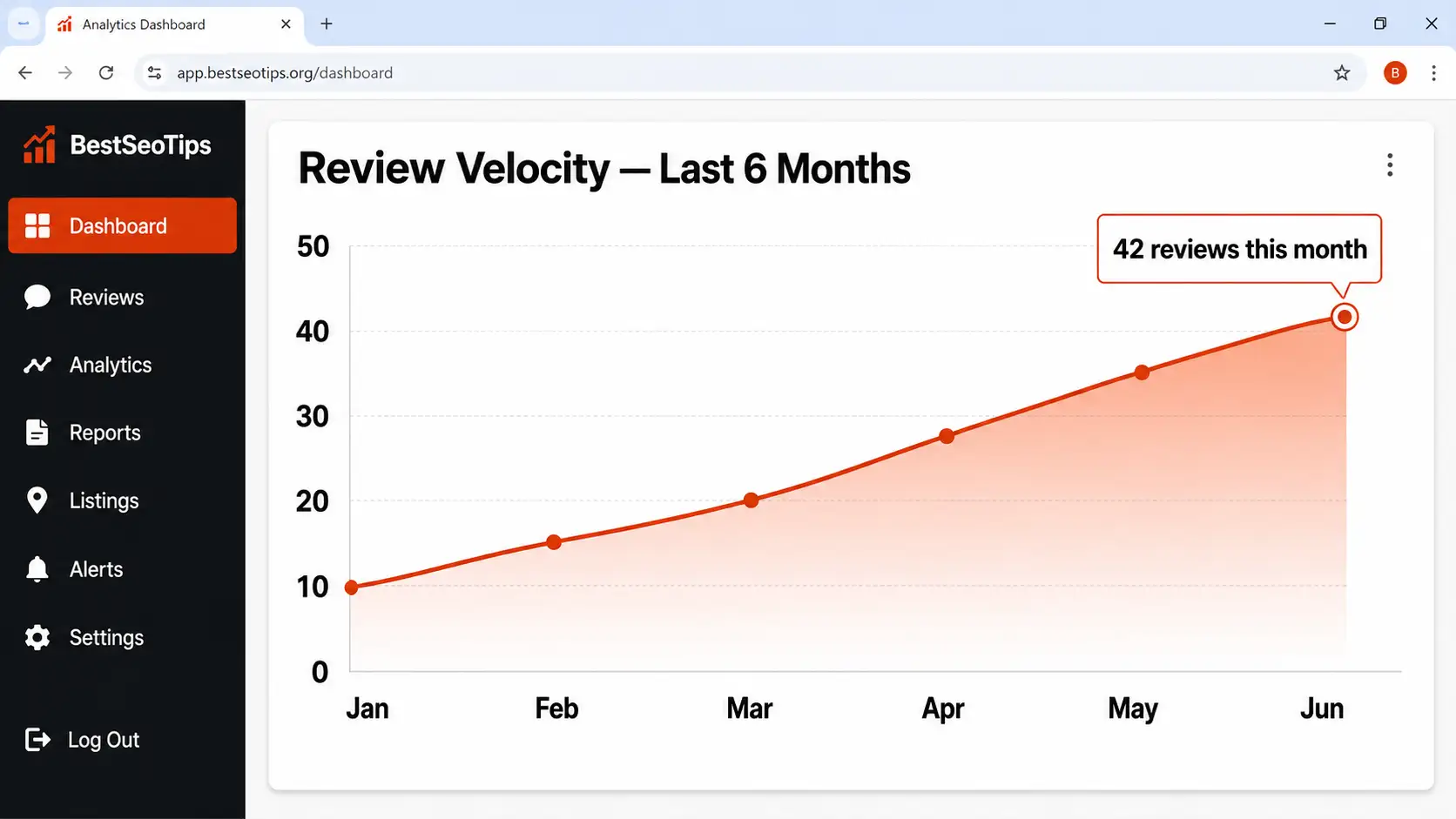
Review velocity measures how often new reviews come in over a set period. It is one of the clearest health scoring signals because steady activity suggests your business is still generating customer feedback from real, current experiences. A flat line can signal low engagement or weak follow-up.
You should not look at total reviews alone. Timing matters. If most of your reviews came months ago, your profile may feel inactive even if the average rating looks fine. Review velocity helps you track whether your reputation reflects what customers think today.
Watch for these signs:
- A steady monthly flow of reviews usually supports a healthier review profile.
- Sharp drops may point to lower engagement levels or fewer review requests.
- Sudden spikes need review for authenticity, especially if the tone feels unnatural.
Recency: The Impact of Fresh Reviews on User Decisions
Fresh reviews carry more weight because people trust current experiences. In the customer journey, a review from last week often feels more useful than one from last year. That is why recency is a core metric in any review health score.
This is not just about visibility. It is about customer behavior. When recent reviews are missing, potential buyers may wonder if standards have changed, if service quality dropped, or if the business is less active. Even a strong historical rating can lose influence when freshness fades.
Recency also helps you judge customer experience in real time. If your latest reviews mention faster support, smoother onboarding, or better outcomes, that is a positive signal. If newer feedback becomes more critical, it may show a shift that needs immediate attention. 2026 review recency benchmarks explained can provide valuable insights into how customer perceptions evolve over time. Understanding these benchmarks is essential for businesses looking to stay competitive and responsive to their clients’ needs. By regularly analyzing feedback trends, companies can make informed decisions and implement improvements that foster customer loyalty.
Responsiveness: Reply Rate and Speed to Customer Feedback
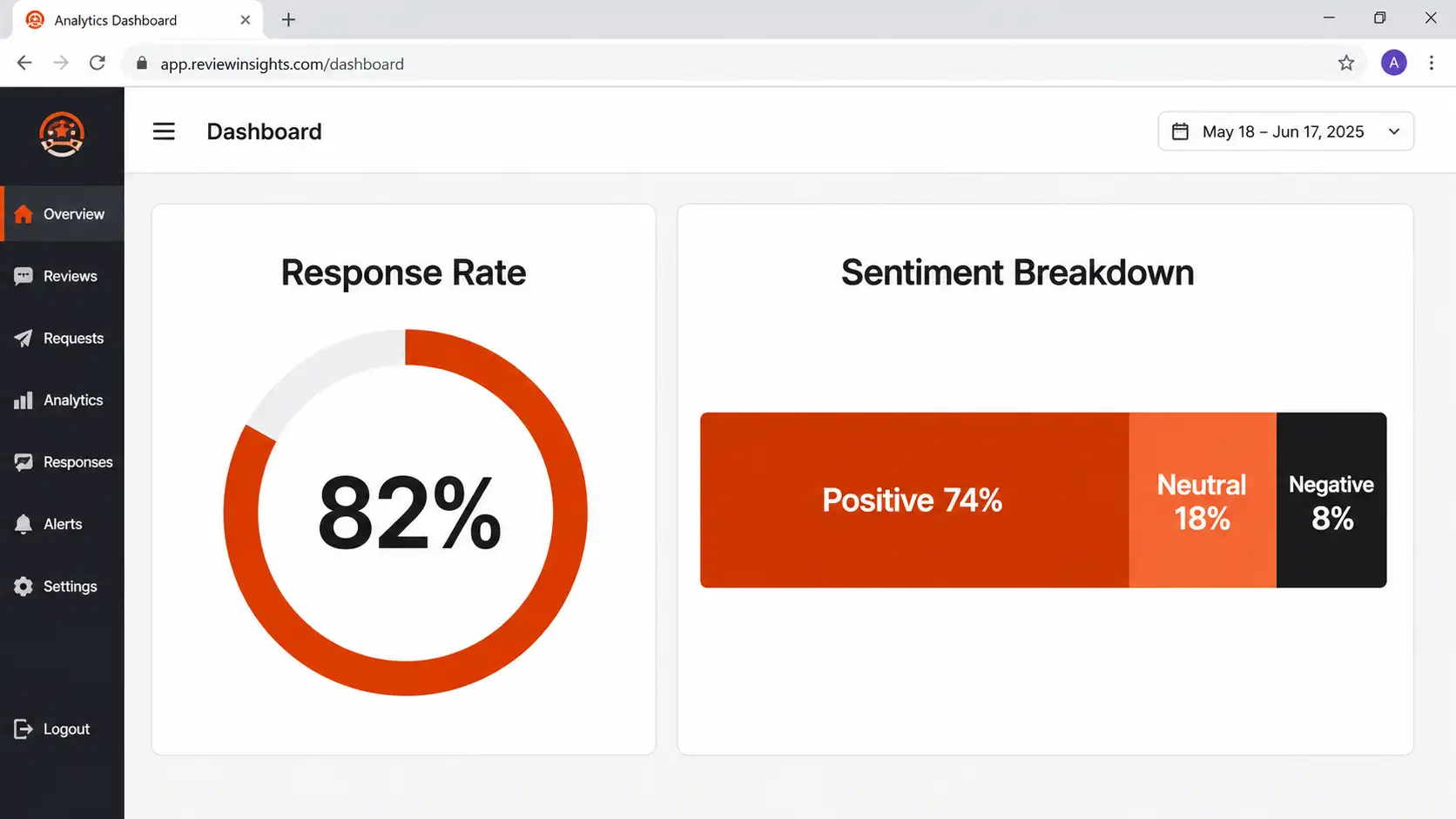
Responsiveness shows whether you acknowledge reviews and how quickly you do it. In practice, this reflects how visible your customer support culture is to the public. Fast, thoughtful replies signal care. Silence can suggest the opposite, even when the original review is positive.
This metric is especially important because review platforms are public. Your response affects not only the reviewer, but also every potential customer reading that exchange. Strong responsiveness supports customer engagement and shows that support interactions do not end when feedback is posted.
Focus on these measures:
- Reply rate: the percentage of reviews that receive a response.
- Reply speed: how long it takes your team to respond after a review appears.
- Quality of replies: whether responses address the issue instead of sounding generic.
Review Volume: Why Quantity Still Counts
Review volume still matters because people want enough proof before they trust a business. A high score based on only a few reviews may look weak, especially if your customer base is large. Quantity gives context to quality.
Volume also works as a rough signal of account health at the brand level. If many customers are using your service or product, but only a tiny number leave feedback, you may have a gap in follow-up, review collection, or overall engagement. In that sense, review volume can mirror the logic behind product usage and adoption signals.
That said, more is not always better by itself. You want a healthy number of reviews spread over time, not a one-time burst. A strong review health score balances review volume with freshness, response habits, and sentiment quality.
Sentiment and Rating Trend: Analyzing Shifts in Customer Perception
Sentiment tells you how customers feel, while rating trend shows whether those feelings are moving up or down. Both matter because your scoring model should track direction, not just the current average. A 4.2 rating rising from 3.8 can be healthier than a 4.6 rating sliding downward.
This is where customer sentiment becomes especially useful. Review text can reveal recurring friction around support, setup, billing, or product adoption. Those themes often show up before broader churn or retention issues become obvious in other systems.
Examples of direct impact include:
- A growing share of negative language around delays or unresolved issues.
- A steady rise in positive mentions tied to onboarding or ease of use.
- A downward rating trend across several months, even if the average still looks strong.
Consistency Across Platforms: Monitoring Multi-Channel Feedback
Your review profile does not live on one site. Customers move across platforms during the customer journey, and they compare what they see. That is why consistency matters. If one platform looks healthy and another shows unresolved complaints, trust can break quickly.
Different segments also rely on different data sources. Some customers read Google reviews first. Others may check industry directories or software review sites. A review health score becomes more reliable when it pulls signals from the places your audience actually uses.
You do not need perfect scores everywhere. You do need alignment. When sentiment, responsiveness, and freshness are reasonably consistent across channels, your reputation feels credible. Large gaps between platforms can signal service issues, neglected listings, or uneven follow-up that deserves attention.
Review Authenticity: Filtering Out Fake or Irrelevant Reviews
Authenticity protects the accuracy of your score. Fake, duplicate, or irrelevant reviews distort customer feedback and can hide the real customer experience. If your model counts everything equally, it may produce a misleading result.
That is why review authenticity should be monitored in real time where possible. Suspicious review bursts, repeated wording, or feedback that does not match your service can all weaken trust. Filtering these issues helps preserve a cleaner signal for decision-making.
Useful checks include:
- Look for clusters of reviews posted within a very short time window.
- Flag repeated phrases or generic wording across multiple profiles.
- Separate irrelevant reviews that do not reflect your actual business or service.
Building an Effective Review Health Score Model
A review health score works best when it is built with intention. Your health score model should combine the review signals most connected to trust, engagement, and retention. If the scoring model is too simple, it will miss early warning signs.
Customer success teams already use customer data to spot risk and expansion opportunities. Review health scoring follows the same principle. Choose meaningful inputs, assign sensible weight, and update the model as customer behavior and market expectations change. That keeps the score useful, not decorative.
Choosing, Weighting, and Combining Key Review Metrics
To create a reliable score, start with the review metrics that best reflect current reputation health. Then assign weighting based on business impact. Fresh negative reviews may matter more than old positive ones. Slow reply times may matter more if service quality is a core differentiator.
A practical scoring model should combine health signals rather than overvalue one metric. That is the same logic used in customer health score systems. When you balance relevant data, your final score becomes more predictive and easier to act on.
| Metric | Suggested Role in Scoring Model | Why It Matters |
|---|---|---|
| Review velocity | Leading signal | Shows whether new customer feedback is consistently coming in |
| Recency | High weight | Reflects how current and trustworthy your profile feels |
| Responsiveness | High weight | Signals visible care and strong customer support habits |
| Review volume | Supporting signal | Adds credibility and context to your overall rating |
| Sentiment/rating trend | High weight | Tracks direction of customer perception over time |
| Consistency/authenticity | Validation layer | Keeps the score accurate across channels and filters noise |
Common Pitfalls When Designing a Review Health Score Model
Many businesses make their health score model too narrow. They rely on ratings alone or pull from too few data sources. That creates blind spots. A score based only on historical data may look stable while current review quality is getting worse.
Another issue is using static rules for too long. Customer expectations shift, platforms change, and review behavior evolves. If your score never changes with those patterns, it becomes less useful over time and harder to trust.
Common pitfalls include:
- Overweighting one metric, such as average rating, and ignoring supporting context.
- Using outdated historical data without enough emphasis on recent activity.
- Failing to review different data sources, which can hide problems on neglected platforms.

How Different Industries Adapt Review Health Score Metrics
No single score fits every business. Industry benchmarks vary because customer expectations and review habits vary. A restaurant may need frequent fresh reviews, while a B2B service provider may see lower volume but more detailed feedback.
Your business model shapes what matters most. SaaS companies may care more about sentiment tied to onboarding, support quality, and product reliability. Local service brands may place more weight on recency, response speed, and platform consistency because buyers compare options quickly.
Different segments inside the same company may also need different views. New customers may generate feedback about setup, while long-term customers focus on value realization and support quality. A strong model respects those differences instead of forcing one rigid formula across all situations.
Measuring and Benchmarking Your Review Health Score
Once your model is built, measurement becomes the next priority. Good benchmarking helps you understand whether your review health score is strong for your category, weak for your market, or simply average. That perspective makes the score more useful.
You should compare trends, not just static numbers. Pull from consistent data sources and connect review patterns to business outcomes like retention rates and customer lifetime value where possible. Over time, that helps you see whether review improvements are supporting stronger trust and better long-term performance.
Step-by-Step Guide to Calculating Review Health Scores
Start by selecting the metrics that reflect review quality and public trust. Common inputs include velocity, recency, responsiveness, volume, and sentiment trend. Next, normalize the metrics into a shared range, such as 0 to 100, so the scoring model stays easy to read.
Then assign weights based on impact. For example, recent review quality may matter more than total historical count. Add the weighted values to produce a final score. This gives you a simple health scoring method rooted in customer data and observable customer behavior.
A practical process looks like this:
- Choose your metrics and define how each one is measured.
- Convert all values to the same scale and apply weights.
- Review score changes against outcomes like trust, conversion, or retention to test usefulness.
Industry Benchmarks: What Does a Healthy Review Score Look Like?
A healthy score depends on your category, but broad ranges can still help. The goal is not perfection. It is consistency, freshness, and visible care. Strong benchmarks usually reflect a balanced mix of recent reviews, active responses, and stable sentiment.
For a SaaS business, fewer reviews may be normal, but detailed, current feedback tied to support and value can still signal healthy customers. In local services, higher review flow and faster responses may carry more weight because purchase decisions happen quickly.
| Score Range | General Meaning | Common Signal Pattern |
|---|---|---|
| 80-100 | Strong | Fresh reviews, good reply habits, stable or improving sentiment |
| 60-79 | Watch closely | Mixed recency, uneven responsiveness, or slowing review flow |
| 40-59 | At risk | Declining tone, outdated feedback, low engagement across platforms |
| 0-39 | Critical | Sparse recent reviews, poor response practices, clear negative trend |
Signs Your Review Health Score Is Declining (and What to Watch For)
A declining health score rarely appears without warning. In most cases, the signals show up first in pace, tone, or response habits. If you watch score changes closely, you can catch problems before they turn into larger retention risk.
Pay close attention when recent reviews mention repeat support issues, delayed responses, or declining service quality. These are not just reputation concerns. They can reflect wider customer feedback trends that may affect renewal, referrals, or trust in the brand.
Watch for these warning signs:
- Fewer new reviews over several weeks or months.
- Rising negative sentiment or a downward rating trend.
- Lower reply rates, slower responses, or visible gaps after complaints.
Strategies to Improve and Maintain a Strong Review Health Score
Improving your score is not about chasing reviews blindly. The best customer success strategies focus on better experiences, timely follow-up, and consistent attention to feedback. When engagement levels rise, review quality often improves with them.
Long-term gains come from making review health part of normal operations. That means monitoring patterns, solving visible friction, and helping customers reach value realization faster. When people feel heard and supported, customer loyalty grows, and your review profile becomes stronger in a more sustainable way.
Reviewing and Updating Core Metrics Regularly
Your review health score should not stay frozen. Review patterns shift, platform activity changes, and new customer concerns emerge. If your core metrics never get revisited, your health scoring can drift away from reality.
A good rule is to review metrics regularly and compare them against recent results. Are the score changes matching what you see in customer behavior and public feedback? If not, you may need to adjust weighting, thresholds, or data sources. That keeps the model relevant.
This review process also supports better planning. You can see whether certain platforms deserve more focus, whether response standards need improvement, or whether negative themes are appearing more often. Updating the score model on a regular schedule helps you keep it accurate and actionable.
Actionable Tactics to Boost Customer Engagement and Positive Reviews
If your score is weak, start by improving the moments that shape reviews. Better communication, faster issue resolution, and proactive follow-up often have the biggest impact. Positive reviews usually follow stronger customer satisfaction, not the other way around.
You should also make it easy for customers to leave feedback after successful interactions. That helps increase customer engagement without forcing the process. Over time, better review quality can support stronger retention rates and even expansion opportunities by building trust with both current and future buyers.
Try these tactics:
- Ask for reviews after resolved support cases or successful onboarding milestones.
- Respond quickly and thoughtfully to all feedback, especially negative posts.
- Track common complaints and fix the underlying issue instead of treating each review in isolation.
Frequently Asked Questions
How often should businesses update their review health metrics?
Businesses should review their review health score metrics regularly, not just once a year. Frequent checks help ensure the model still reflects relevant data, current customer health, and changes in the customer journey. Strong health scoring depends on keeping weights, thresholds, and inputs aligned with real review behavior.
What are some examples of effective review health metrics?
Effective metrics include review velocity, recency, sentiment, responsiveness, and review volume. Together, they show whether feedback is current, credible, and trending in the right direction. Unlike product usage metrics, these indicators measure public reputation health and help you understand how customers currently perceive your brand.
Which tools help analyze and track review health scores efficiently?
Teams usually track review health scoring through platforms that combine multiple data sources, review monitoring, and response workflows. Systems used by SaaS companies and customer success managers often work best when review data can be viewed alongside support tickets, engagement patterns, and other customer signals in one place.
Conclusion
In summary, understanding and monitoring your Review Health Score is crucial for navigating the competitive landscape of 2026. By focusing on key metrics such as review velocity, recency, responsiveness, and sentiment trends, you can gain valuable insights into customer perception and engagement. Regularly assessing these factors will not only help you maintain a healthy score but also enhance your overall brand reputation. Remember, the journey to improving your review health is continuous—it’s about creating authentic connections with your customers and responding to their feedback. If you’re ready to take actionable steps towards enhancing your review health, consider booking a free consultation to explore personalized strategies tailored to your business needs.

Harper Wilson
Harper Wilson writes about software review platforms and the importance of customer feedback in today's business decisions. She covers G2, Capterra, Reviews.io, and other top review sites. Her articles look at profiles, ratings, getting reviews, customer feedback, and reputation. Harper also shares how businesses can use reviews to appear more trustworthy, understand what people feel, and boost their online presence. She works to provide clear ideas and useful tips that help businesses keep up with online reviews and use customer feedback more effectively.